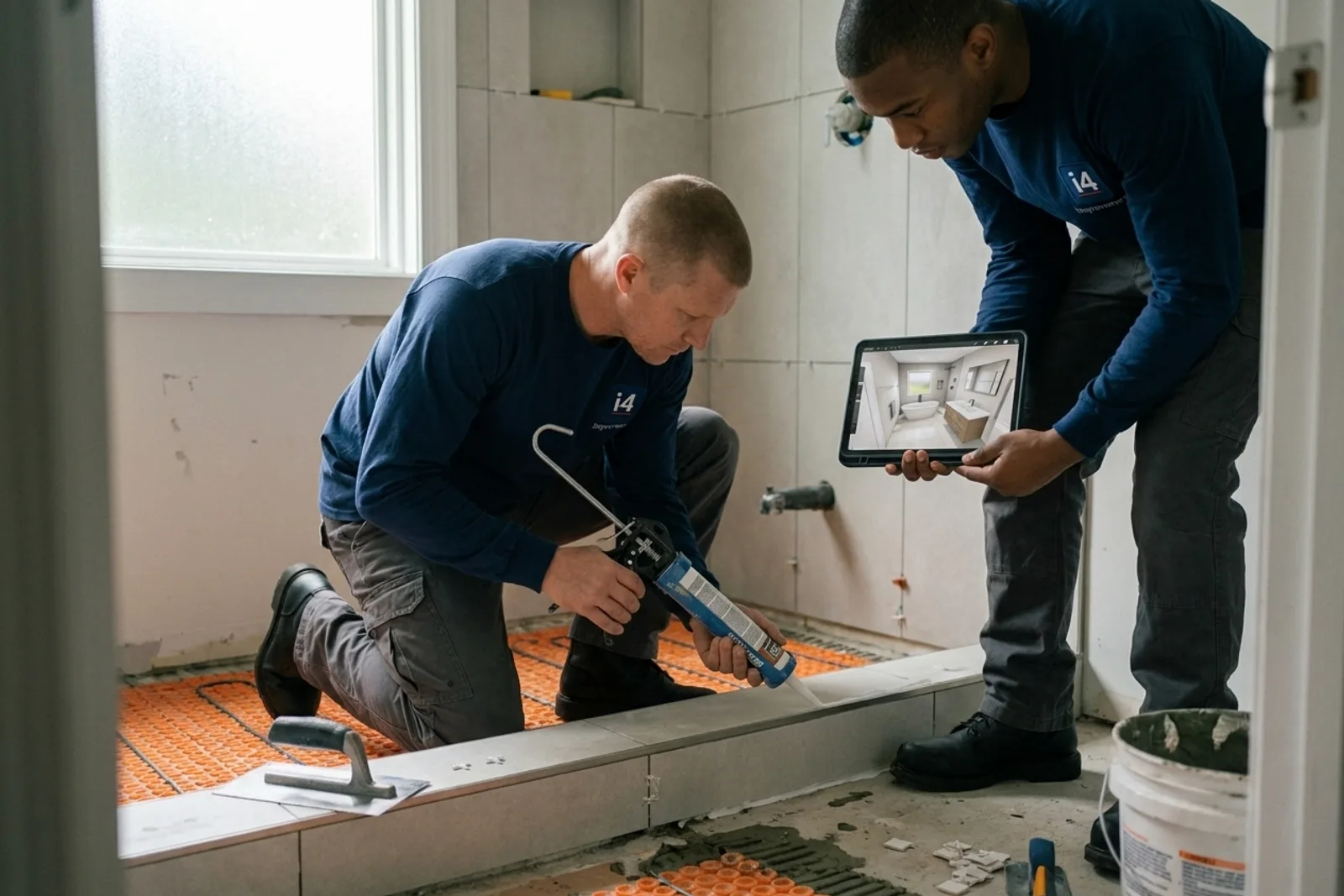
Primary Bathroom & Master Suite Upgrades in D.C., Northern Virginia & Maryland
Whether you want a modern spa-style wet room or aging-in-place modifications that future-proof your home, our bathroom remodels are engineered for affluent D.C. clients. Free virtual design consultations and 3D rendering previews are standard.
What's included
- Spa-Style Wet Rooms
- Aging-in-Place Upgrades
- Virtual Design Consultations
- Heated Floors & Premium Fixtures
Bathroom Remodel Costs
The cost of a bathroom remodel is determined by the project's size, the materials selected, and the complexity of the work. Because every bathroom and a homeowner's vision is unique, we create a custom quote for each job.
- Scope and Size: The project's scale is a primary cost driver. A cosmetic update to a small powder room has a different cost than a full gut renovation and expansion of a master bathroom.
- Layout Changes: Keeping the existing plumbing and electrical layout is the most direct approach. Moving walls, relocating a toilet or shower, or changing the room's footprint adds complexity and cost.
- Materials and Finishes: Your choice of tile, countertops, flooring, and cabinetry significantly impacts the total price. We help you select materials that fit your aesthetic, from standard options to custom pieces.
- Fixtures and Features: The cost varies between basic fixtures and high-end selections. Features like freestanding tubs, custom shower glass, heated floors, and steam showers add to the project's total cost.
- Plumbing and Electrical: Updating old pipes or converting a tub to a shower requires skilled work. Adding new circuits for lighting and outlets also affects the overall investment in your bathroom remodel.
- Structural Work: Repairing hidden issues like water damage or mold will affect the total cost. Altering structural components, such as moving a load-bearing wall, also increases the project's scope and price.
To understand the specific investment for your bathroom renovation, request a free, itemized estimate from our team.
Our Bathroom Remodeling Process
- Initial Consultation: The process begins with a conversation about your bathroom remodel. We listen to your ideas, functional needs, and the goals you have for the space.
- On-Site Assessment: A team member visits your home to see the current bathroom and take measurements. We also assess the condition of the existing plumbing and electrical systems.
- Design and Selections: We work with you to finalize the layout, materials, fixtures, and finishes. This step defines the scope of work and the final appearance of your new bathroom.
- Itemized Estimate: Based on the final design and selections, we prepare a detailed estimate. This document lists the specific costs for all labor and materials required.
- Construction: Once you approve the estimate, our crew begins the demolition and build-out. We manage the day-to-day work on site through to completion.
- Final Walkthrough: When construction is complete, we review the finished bathroom with you. We walk through the space to confirm all work matches the project plan.
Permits for a Bathroom Remodel
Permit rules for a bathroom remodel differ across Washington, D.C., Virginia, and Maryland. The scope of your project determines which permits, if any, are required in your specific jurisdiction.
In Washington, D.C., the Department of Buildings' Alteration and Repair permit is used for bathroom remodels. A permit is needed to alter plumbing, electrical, or mechanical systems. However, work exempt from a permit includes finish work like tiling, cabinets, and countertops. In one- and two-family homes, replacing a sink, faucet, or toilet is also exempt if pipes are not rearranged. According to the D.C. Building Code, cutting a wall or structural beam is not an ordinary repair and requires a permit.
The Virginia Construction Code requires a permit for any bathroom remodel that involves adding or removing walls or altering plumbing and electrical systems. Statewide exemptions include installing cabinets, floor finishes, or replacing fixtures without changing the supply or drain lines. In Fairfax County, a building permit is required for bathroom remodels, but not for replacing cabinets, vanities, or flooring. Arlington County states that no permit is needed if you are only replacing fixtures or cabinets in the same location without moving pipes or drywall.
In Maryland, permit rules vary by county. Montgomery County requires a permit for bathroom renovations but exempts replacing a faucet, installing countertops, or flooring. Bathroom remodels under 400 square feet may qualify for the county's Residential Fast Track process, where permits are issued online in one to two days in most cases. Prince George's County's DPIE also lists bathroom renovations as a project that needs a permit, while replacing a counter does not. Owners of owner-occupied single-family homes and townhouses in Prince George's County may be eligible for the walk-through permit process.
Sources (Read November 5, 2026): D.C. Building Code 2017, sections 105.1, 105.2 and 105.2.5; D.C. Department of Buildings, Alteration and Repair permit; Virginia Construction Code 108 (13VAC5-63-80); Fairfax County, Does my project require a permit?; Arlington County, Residential Building Permit; Montgomery County DPS, Residential Alterations permit process; Montgomery County DPS, Residential Fast Track eligibility; Prince George's County DPIE, When is a permit required?; Prince George's County DPIE, Walk-Through permit process